
 Русский
  English
  Deutsch
  Português
  中国
中国  Español
  Français
  日本語
日本語 Isolating pipes in industrial settings is a common practice for maintenance, repair, or modification of piping systems. Understanding and using best practices for isolating critical processes such as phenol is especially important, impart to protect the people downstream performing the maintenance, as well as the people that are performing the isolation, as they can also be exposed to critical process fluids such as phenol.
Isolation per OSHA (standard 1926.1202) means “the process by which employees in a confined space are completely protected against the release of energy and material into the space and contact with a physical hazard.”
Choosing proper methods and devices with proper material is crucial to ensure the safety of both the people downstream performing maintenance but also of the operators themselves performing the isolation.
This blog delves into the hazards associated with isolating pipes flowing phenol and emphasizes the importance of assessing the proper means to protect all personnel involved in the process.
Phenol, also known as carbolic acid, is an aromatic organic compound that is widely used in the production of plastics, pharmaceuticals, and other basic materials used to make consumer products. It’s everywhere, from the glue to hold lumber products, to cosmetics, to the coatings on your cookware to make it non-stick. Phenol’s chemical properties, such as its ability to act as a precursor to many important compounds, make it extremely essential and valuable. However, phenol by itself is hazardous to people and the environment if handled improperly, especially when isolating it in piping equipment. In short, phenol can easily be deadly if exposed to personnel.
The Hazards of Phenol in Pipe Isolation
As we explore the process of isolating pipes flowing phenol, it’s essential to acknowledge the inherent hazards involved:
- Corrosive Nature: Phenol is highly corrosive to both human tissue and certain metals. When used in pipe isolation, it can cause severe corrosion to the piping material, leading to potential leaks, bursts, and structural failures.
- Toxicity: Phenol is highly toxic and can be absorbed through the skin, inhalation, or ingestion. Exposure to phenol can result in serious health such as death.
- Flammability: Phenol is flammable and can form explosive mixtures with air if released to the environment posing risks to both nearby workers and the area.
Means to Properly Isolate Critical Processes
Means to properly isolate critical process per OSHA guidelines 1926.1202 are the following:
- Blanking or blinding: Fastening a solid plate to cover the bore completely.
- Double block and bleed: Closing and locking/tagging two in-line valves and opening a drain or vent valve in between.
- Lockout or tagout: Ensuring all sources of energy are locked or tagged.
- Misalignment: Misaligning or removing sections of lines, pipes, or ducts.
- Disconnection: Blocking or disconnecting mechanical linkages.
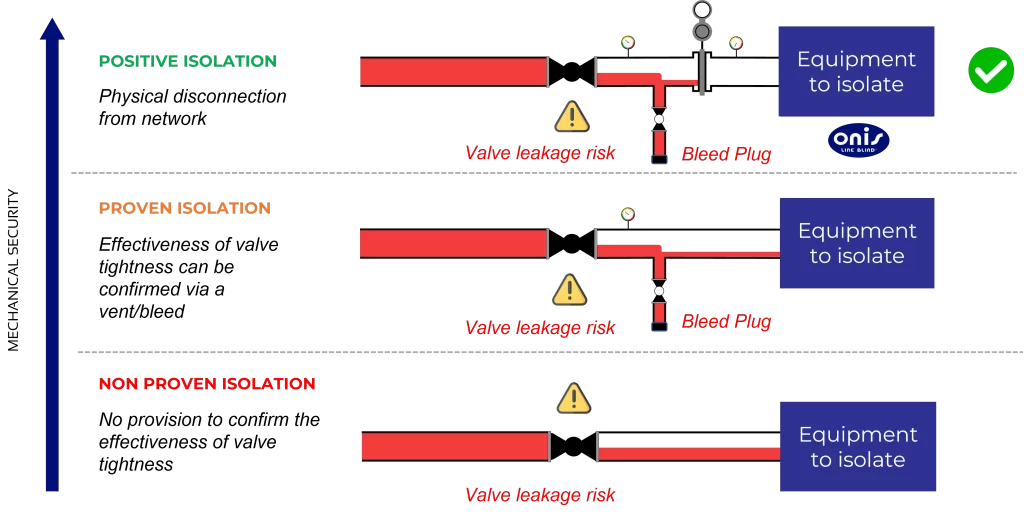
Other important considerations when isolating equipment is the ease and means to the operators performing the blinding to prevent exposure. The considerations include:
- Amount of time to isolate: the longer it takes for an operator to isolate increases the risk of exposure
- Number of people required to isolate: the higher the number of people required to isolate increases the number of people that can be exposed to the process fluids
- Closeness to phenol: the closer an operator is to phenol increases the risk of exposure
A Proper Isolation for Safety
In conclusion, it is essential to properly isolate equipment per OSHA requirements. Using common means such as valves do not eliminate the chance of exposure because a leak in a valve will allow fluid to go downstream and cause personnel exposure to the people performing maintenance. Instead, the equipment that is having maintenance should be disconnected from the process itself such that there is no physical means to communicate process fluid from the upstream to the downstream where maintenance is being performed.
For better and safer means to isolate piping equipment flowing critical processes such as phenol, click here to read about Onis Line Blind equipment, pipe blinds, and other industrial piping products.