 Русский
  English
  Deutsch
  Português
  中国
中国  Español
  Français
  日本語
日本語 The ONIS conference at IVS 2026 presents critical insights from 20 Years of HSG 253 analysis and introduces smart piping technologies to reduce operational downtime and mitigate risk in Oil & Gas and chemical industries.
Bergamo, 19th May 2026—ONIS, a leading provider of safe, efficient, and repeatable pipe isolation solutions, today shared important findings at IVS 2026, led by Laurent Latimier, General Manager. The session gave a detailed look at historical industry guidelines (HSG 253). ONIS shared its vision for the future, moving from compliance-based safety measures to actively engineered solutions that reduce human risk and support ambitious Net Zero goals.
Human Error Remains the Leading Cause of Industrial Incidents
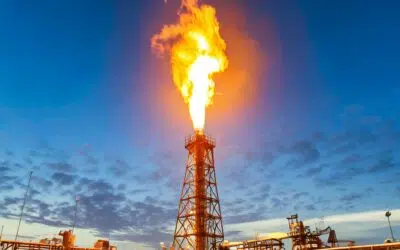
According to industry reports, human intervention causes 64% of hydrocarbon leaks above 0.1 kg/s, and this figure has remained stable over time. The presentation highlighted refinery fire as a critical case study. In this incident, a combination of complacency, procedural non-compliance, and training gaps led to a catastrophic event.
Mr. Latimier underscored the distinction between trained compliance and true operational competence:
“While procedures may be documented, workers achieve risk reduction only when they understand the why behind each step. True safety cannot rely solely on perfect human adherence to complex procedures.”
HSG 253 Evolution: Toward Engineered Safety and Zero Exposure
HSG 253, the UK’s guideline for plant isolation, introduced a rigorous 5-step matrix to determine appropriate isolation levels. If step 5 recommends positive isolation, ONIS proposes expanding this framework with a step 6. An additional step designed for including today’s challenges such as sustainability and digital transformation.
The enhanced methodology introduces three progressive solutions based on the results of the step 6 matrix:
Step 6-1: Mechanized Line Blind (QLB)
- Reduces pipe opening time by up to 95% (e.g., from 2.5 hours to 2 minutes)
- Eliminates the need for tools and repetitive manual tightening
- Maintains Category I positive isolation integrity while reducing operator exposure
- Recommended for frequent operations, high-risk environments, and repetitive tasks
Step 6-2: Double Barrier Bleed & Blind (D3B)
- Combines two block valves, bleed points, and an interlocked mechanized blind
- Reduces human error by 80% and minimizes dead volume
- Suitable for close to medium valve distances and medium to high human error risk
- D5B variant adds active flushing (N₂/steam) for absolute zero release in toxic scenarios
Step 6-3: Automated D3B/D5B
- Enables 100% remote operation, eliminating onsite presence
- Fully auditable, repeatable, and resilient
- Meets strict Net Zero and operator safety mandates
- Optimal for digital plants integrating DCS/SCADA systems
“Our data and engineering experience show that true risk reduction is achieved not by human procedure alone, but by building safety into the equipment itself.” said Mr. Latimier.
The future relies on mechanized, interlocked, and automated solutions. These solutions can be repeated, checked, and help meet corporate net-zero goals.
Industry Alignment with Net Zero and Safety Goals
Major oil and gas players have set ambitious targets: zero human error, zero emissions, and zero operator exposure by 2030–2050. Current statistics reveal that existing isolation methods often fail to meet these objectives due to reliance on manual intervention and outdated technology.
ONIS’s proposed Step 6 aligns with these goals by:
- Reducing downtime and maintenance costs
- Eliminating leaks during pipe opening
- Lowering flaring and emissions via controlled bleed and zero-dead-volume design
- Supporting Industry 4.0 through full automation
A Call for Technological Transformation
As industries aim for operational excellence, the ONIS conference at IVS 2026 supports extending the HSG 253 framework. This extension prioritizes mechanical, interlocked, and automated isolation systems that meet current and future industry objectives.
Mr. Latimier concluded:
“HSG 253 provided a strong foundation. However, the technological advances and the necessity of safety and environmental targets demand an evolution. ONIS is ready to support industries in transitioning from best practices to best technologies.”
To get the full conference presentation, contact us at onislineblind.com.
Об ONIS
Since 1979, ONIS has delivered innovative, operator-independent piping solutions, enabling safe and efficient isolation with up to a 95% reduction in downtime during pipe opening operations. With over 12,000 devices deployed worldwide, ONIS helps oil & gas and chemical industries minimize risk, enhance productivity, and align with Net Zero commitments. ONIS technology supports operations across extreme temperatures (-120°C to 650°C / -248°F to 1200°F) and pressures up to 420 bars (6,000 PSI).